Starting today, if WEVO’s AI audience doesn’t match how your real customers respond, you don’t pay.
By Nitzan Shaer, Co-Founder and CEO, WEVO
Every technology that people use to make big decisions eventually faces the same test. Before anyone bets a launch, a loan or a flight plan on it, they want to know one thing: how often is it right?
Weather forecasts are trusted in part because forecasters track how often a 70% chance of rain actually brings rain. Cloud computing won over the enterprise once providers put money behind their uptime. Credit scores became the basis of lending because they were checked, year after year, against what borrowers actually did.
Synthetic audiences have now reached that moment. So starting today, WEVO guarantees its AI audiences. If our AI audience does not match how your real customers respond, you don’t pay. We are the first AI synthetic audience company to make that commitment.
The bottleneck has moved from making to deciding
AI has made creating concepts, products and campaigns nearly free. A team can now produce ten versions of a landing page, a product idea or a campaign in the time it once took to make one. The constraint is no longer production. It is judgment: which of these deserves to launch?
Traditional testing with real people was not built for that volume. A study can take weeks and cost tens of thousands of dollars. So most ideas still ship on instinct, and the market becomes the test. It is the most expensive test there is.
Synthetic audiences change the economics. A synthetic audience can react to a concept, a page or a campaign in about 15 minutes. That is why this category has grown so quickly, and why teams that once tested a few big bets a year can now test nearly every decision.
Speed was never the hard part. Trust is.
Every leader who considers synthetic audiences asks the same question first: would real people say, and act, the same way?
It is the right question, and the industry has mostly answered a different one. Accuracy is usually reported as an average: across many studies and many audiences, the model agreed with people a certain share of the time. That number says little about your customers. A model can be excellent on mainstream consumers and wrong about small business owners, retirees or a niche B2B buyer. Averages hide exactly the audiences where a wrong answer costs the most.
Experienced insights teams have learned what goes wrong with first-generation tools:
- Generic models drift toward the average and tell you what you already know.
- Long reports offer volume instead of a decision.
- No one can say where the result is right and where it is wrong, so no one can defend it in a leadership meeting.
We believe teams using synthetic audiences deserve the same confidence they are used to getting from asking real people. When AI can feel like a black box, that confidence cannot be claimed. It has to be measured, audience by audience.
Parity is measured on your customers, and we stand behind it
We call our answer Synthetic-Organic Parity (SOP). We run the same study twice: once with WEVO’s AI audience, and once with matching real people, drawn from our panel of 60 million people or from the client’s own in-market A/B testing results. Then we compare the two insight by insight, not just score against score.
Across hundreds of tests, WEVO Pulse reproduces 85% to 100% of the insights of a 120-person human study. That accuracy rests on more than a million real human responses to digital experiences, data no general-purpose AI model has seen.
That range is a starting point, not a promise about your customers. The number that matters is the one we measure on your audience, and that is the number we guarantee.
If parity for your audience comes in below 80%, we don’t charge for it, and we work with you to raise it. A confident wrong answer is worse than no answer, and we would rather lose a study than hand a team one.
The most valuable result is knowing where AI falls short
One multinational financial firm built 14 customer segments (personas) with WEVO and ran SOP on each. Twelve matched real people at 85% to 100%, and the AI also surfaced insights the human surveys had missed. Two segments came in between 70% and 80%.
Those two were as valuable as the twelve. The team now acts on 15-minute reads for twelve of its segments, treats the other two with caution, and brings in real people where the stakes call for it. The debate over whether to trust synthetic audiences ended, because everyone could see where they hold and where they do not.
Three shifts I expect in the next few years
- Accuracy will be bought per audience, with consequences attached. Enterprise buyers stopped accepting “it rarely goes down” from cloud providers. They asked for uptime commitments, with credits when providers missed. Synthetic audiences will follow the same path. Buyers will expect every vendor to show accuracy on their own customers, and to stand behind it commercially.
- Real people become the calibration layer, not the bottleneck. Real people will be asked where they add the most: setting ground truth for new audiences, and confirming the decisions where a wrong answer is expensive. AI audiences will carry the volume in between. That only works when both live on one platform and can be compared directly.
- Validation becomes a gate, not an event. When a test takes minutes instead of weeks, it stops being a project and becomes a step every idea passes through, the way code review became part of shipping software. Launching without it will look as reckless as driving without a seatbelt. Insights leaders will move from running studies to setting the standard: which audiences are calibrated, and which score a concept must reach before it ships.
Four questions to ask before relying on any synthetic audience
1. Was its accuracy measured on your customers, or on someone else’s?
2. Is it compared insight by insight, or only by a headline score?
3. What happens when it is wrong for your audience?
4. When the stakes are high, can you check it against real people on the same platform?
Knowing your number changes the question
Once a team knows its number, the conversation changes. It stops asking “can we trust this?” and starts asking “what else should we test?” That shift is why we built SOP, and it is what I am most excited about at WEVO today.
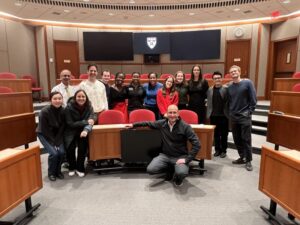
Thank you to the WEVO team who built SOP, and to the customers who pushed us to prove it.
See parity on your own customers
Tell us the audience your team keeps coming back to, and we will measure how closely our AI audience matches it. If it falls short, you won’t pay for it.
- Book 20 minutes with our team to scope a parity test
- Prefer to try it yourself first? Run a synthetic audience study in 15 minutes.